
 The number of vendors has increased over the past few months in Harare – shop-side vendors dangling plastic sleeves of tomatoes, potatoes, onions and okra from sticks like veggie mobiles; street-side vendors displaying their greens, mangoes, avocadoes and maputi (popped maize) on upturned boxes; and, my favorite, the men who defy death itself, standing smack dab in the middle of busy roads (even when the lights aren’t working) hawking the most delicate of commodities – crates of eggs.
Given Zimbabwe’s ever-more-astronomical currency denominations, bargaining for these items sounds absolutely ridiculous. “Tomatoes, imari?” I ask. “Five million.” “And the potatoes?” “Seven point five.” "I’ll give you 10 million for both." “11.” Sold. And so I count out a small pile of bills – one 5 million note and 30 200,000s.
I am picky about my produce. The tomatoes can’t be too ripe or too firm; the mangoes and avocados must be string-less. And the potatoes I seek out from venders are the tiny, spherical ones that you barely need to chop. A quick slice or two and they become bite-size.
These potatoes are ideal for tourchi batata, a spicy potato salad from Tunisia that can be served hot, cold or anywhere in between. This salad is quick to prepare and easy to double – after making it the first time and seeing my husband gobble it up I have vowed never to make a single recipe again. You could peel the potatoes, but I like to keep them on. I served tourchi batata last week as a tapas-like dish with afternoon drinks – beer cuts the spice best. I’ll let my friends make their own comments, but I think the salad was a hit.
Tunisian Potato Salad (Tourchi Batata)
Adapted from Sephardic Cooking: 600 Recipes Created in Exotic Sephardic Kitchens from Morocco to India
Serves 4 as a side dish
1 pound / 450 grams small boiling potatoes
2 tablespoons / 30 milliliters olive oil
1 teaspoon harissa (more, or less, to taste)
½ teaspoon / 2.5 milliliters salt
1 teaspoon / 5 milliliters ground cumin
1 lemon, freshly squeezed
Cook potatoes in boiling water for 15 minutes, or until tender. Cool and cut into cubes (or, with tiny potatoes, just in half). Heat the oil in a skillet, and add the harissa, salt, ground cumin and lemon juice. Bring to a boil and boil for a few seconds. Pour over the potatoes and toss. Let marinate for twenty minutes or so and serve warm, or serve at room temperature, or refrigerate for at least one hour and serve cool.
Saturday, February 02, 2008
Tiny Potatoes, Spicy Salad
Sunday, December 02, 2007
Dear Salad
 Dear Salad,
It is a sunny Sunday afternoon here in Harare – a day just calling out for a salad – and I decided it was high time I write you a short note of appreciation. After all, I have enjoyed salads my whole life.
I’m not certain which came first – me liking salad or me liking the praise adults showered upon me whenever I ate raw vegetables. In any case, I started eating salad young. Growing up, my mom prepared a salad to accompany almost every dinner meal. To our great fortune, she saw right through the pale, watery leaves of iceberg lettuce and introduced us to romaine and red leaf and Boston lettuce way before the Jones’. We might not have had cable until 1995 or an answering machine until 2000, but we were eating tasty, nutritious salads.
My dad dressed you, salad, with his special vinaigrette. He has tried many times to show us how to accomplish this perfect balance of olive oil, red wine vinegar, salt, pepper and dried oregano, yet we can never make it quite the same. Whatever dressing remained at the bottom of the bowl was (and still is) carefully absorbed with a slice of Italian bread.
The other three salads I remember my mom serving were tomato salad (only made in August with tomatoes from our garden and, again, with my dad’s vinaigrette), chef’s salad, and ravioli salad – a “keeper” recipe my mom clipped from the newspaper that combines ravioli, fresh tomatoes, shredded zucchini and grated parmesan. I still make this salad today.
College might have expanded my brain, but it did not expand my repertoire of salads, even though I ate daily from the school’s salad bar. Since the cafeteria charged students according to the size of the salad bowl we used, I learned how to maximize the “small” bowl. I selected the sturdiest slices of cucumber and lined them up around the edges of the bowl, effectively adding another inch to the bowl’s height. Salad, I valued you, but I valued my precious “food points” more.
Once I began cooking on my own, I experimented with salads formed around bulgur and tofu, and learned to appreciate egg salad – now I not only like this Africa-inspired version, but also one by Mollie Katzen that mixes hard-boiled eggs with gremolata and ricotta. When my husband and I moved to Australia to study, we quickly adapted to ordering sandwiches “with salad.” As you know, in Oz, “with salad” does not translate to “side salad;” rather, it is the lettuce, tomato, and, oftentimes, beetroot, placed inside the sandwich itself.
Yet, it has really been over the last two years that I’ve discovered how diverse a genre you really are, salad. Since I began experimenting with North Africa cuisine, I’ve learned that by looking to Tunisia, Algeria and Moroccan, I can take any abundant fruit or veg from my fridge, garden or cupboard – carrots, zucchini, beetroot, dried peaches – and transform it into salads, both warm and cold. Now, I understand that anytime I am cutting up a vegetable and adding some sort of dressing – well, salad, there you are. Thank you.
Best wishes,
Carolyn
The salad I’m enjoying at the moment is a traditional grilled vegetable salad from Tunisia called mechouia (also written salata mishwiyya). It contains a cast of characters familiar to those who prepare chakchouka or turlu turlu. I’ve seen recipes that call for blending the vegetables together after they are grilled or crushing them with a mortar and pestle; others, like this one, request a good fine chop. In addition to the topping of hard-boiled egg and feta cheese, some recipes also call for tuna. Olives or capers would be welcome additions, too.
Mechouia (Grilled Vegetable Salad)
Adapted from Classic Vegetarian Cooking from the Middle East and North Africa
Serves 6 as a side salad
2 large red bell peppers
4 firm medium tomatoes
3 medium onions
1 small chili
45 milliliters / 3 tablespoons freshly-squeezed lemon juice
45 milliliters / 3 tablespoons olive oil
5 milliliters / 1 teaspoon oregano
5 milliliters / 1 teaspoon salt
2.5 milliliters / ½ teaspoon black pepper
2 hard boiled eggs, cut into wedges
40 grams / ¼ cup feta cheese, crumbled
Grill the red peppers, tomatoes, onions and chili (outdoors or on the stovetop), or broil in the oven. Turn the vegetables periodically. Remove the vegetables as they become soft – the chili will grill faster than the onion, for example.
Peel the skins from the peppers and chili and remove as many seeds from the chili as you want; you can keep a few in to add additional heat to the dish. Chop all the vegetables into small pieces.
In a large mixing bowl, whisk together lemon juice, olive oil, oregano, salt and pepper. Add the chopped vegetables and mix well. Transfer to a serving platter and scatter the egg and cheese around the top of the salad. Serve warm.
Sunday, July 29, 2007
One Veggie Star

Serves 4 as a salad
3¼ cups / 500 grams zucchini (a.k.a. courgette, baby marrow), very thinly sliced
1½ teaspoons / 7.5 milliliters ground cumin
2 teaspoons / 10 milliliters sweet paprika
Pinch of cayenne
¼ teaspoon / 1¼ milliliters salt
2 cloves of garlic, minced
1 tablespoons / 15 milliliters olive oil
2½ tablespoons / 37.5 milliliters fresh lemon juice
2 tablespoons / 30 milliliters vegetable broth (you can use water)
Handful minced fresh parsley, plus more for garnish
Thursday, July 12, 2007
With an Egg on Top
 Sometimes you learn a new recipe. And sometimes a recipe teaches you a whole new strategy for composing a meal.
As a fish-a-tarian who rarely cooks fish, my dinners usually fall into one of the following categories: Indian curry; risotto; pasta; veggie or legume-based soup; frittata/quiche; polenta. Until now. Welcome – the vegetable sauté with poached eggs on top.
The inspirational dish was chakchouka, an Algerian/Tunisian creation that, I discovered through a little online searching, was brought by North African immigrants to Israel and is also quite popular there (spelled shakshouka), especially during Passover. Chakchouka is basically eggs poached in a sauté of tomato, onion, green pepper and North African spices. It is so easy to put together – and so warming and flavorful – that you’ll start inventing many other vegetables sautés that could cushion an egg. I’m thinking tomatoes and zucchini with some fresh basil; mushrooms, leeks, parsley and thyme; veggies with Indian spices and a handful of brown lentils; and morshan. In my humble opinion, just like pasta, risotto, or quiche, chakchouka is a brilliant dinner template.
The other reason I love this dish is that I adore poached eggs, but am a failure at poaching eggs myself. (Here is where my husband would say: and you have the audacity to call yourself a food blogger? Yes, I know, I should be able to poach an egg.) I’ve even used those special poaching pans with the ready-made indents, and I still screw things up. Chakchouka is a foolproof way of producing lovely poached eggs, and it even comes with a bonus stew.
The recipe below calls for chickpeas, which are a
North African Pepper and Tomato Stew (Chakchouka)
Adapted from The Vegetarian Times Complete Cookbook
Serves 4
2 teaspoons / 10 milliliters olive oil
1 tablespoon paprika
½ large onion, cut in half widthwise and then into fine slivers
1 large green bell pepper, cut into 2-inch/5-centimeter long slivers
4 garlic cloves, minced
2 green chilies, seeded and cut into 2-inch/5-centimeter long slivers
1 teaspoon / 5 milliliters ground cumin
2 medium tomatoes, coarsely chopped
1 15-ounce/425-gram can of chickpeas, rinsed and drained
½ cup/125 milliliters vegetable broth or water (more, if needed)
Salt and freshly ground black pepper, to taste
4 large eggs
Thursday, June 21, 2007
Mish Mash, Part I
 Tonight, across
Adapted from The Soul of a New Cuisine
Serves 4 to 6
2 sweet potatoes, peeled and cut into 1-inch / 2½-centimeter cubes
½ cup / 125 milliliters peanut oil
1 pound / 450 grams green beans, ends trimmed and cut into quarters
8 tablespoons / 225 grams unsalted butter
1 3-inch / 7½-centimeter piece of ginger, peeled and finely chopped
3 medium carrots, peeled and cut into ½-inch / 1¼-centimeter dice
1 medium red onion, coarsely chopped
2 jalapeno chilies, seeds and ribs removed, finely chopped
1½ cups / 375 milliliters water
1 tablespoon / 15 milliliters Berbere or chili powder
1 tablespoon / 15 milliliters chopped chives
1 teaspoon / 5 milliliters salt
2 tablespoons / 30 milliliters olive oil
Sunday, June 03, 2007
A Sprinkle a Day
 When my brother and I were growing up, the treatment of choice for asthma was a medicine called Theo-Dur. To tempt little asthmatics like us, Theo-Dur was packaged in sprinkle form. I can certainly understand the marketing ploy – why not subvert children’s inherent aversion to medicine and take advantage of their pure, innocent, instinctive love of sprinkles on ice cream? And, the doctor assured us, you could also sprinkle them on applesauce! And pudding! They will make every food more fun!
Well, they didn’t. My brother and I hated Theo-Dur sprinkles.
Theo-Dur sprinkles may have been the first thing in my life that I reluctantly consumed because it was good for me, but it certainly wasn’t the last. I try not to remember, for example, those tasteless celery-sticks I ate in high school because they were rumored to have “negative” calories. My present-day equivalent of Theo-Dur sprinkles is moringa. Moringa oleifera is a tree that grows in tropical and sub-tropical areas, and its leaves, fresh or dried, have many amazing properties. Three times the potassium of bananas! Four times the vitamin A of carrots! Four times the calcium in milk! It is for good reason that the tree is promoted here in Zimbabwe by organizations concerned about people’s nutrition, particularly the nutrition of people living with HIV and AIDS. Leaf powder can be added to any food! It adds flavor and nutrition! Sadly, however, one of moringa’s amazing properties is not tastiness.
Undeterred, my husband has been dusting dried moringa leaves onto his yogurt and muesli breakfast, and even his oats and brown sugar breakfast, for quite a while now. I tried it once, insisted it made my breakfast taste like grass, and thereafter turned up my nose at the stuff. Grassy might be a favorable description when discussing a chardonnay, but not my morning muesli.
I recently discovered that I’m a bit anemic, though, and now instead of just giving me a “but it’s SO good for you” look of guilt every morning as I snub the moringa, Mark has become quite pushy. You see, one of moringa’s amazing qualities is that it is a good sourse of iron. Sigh. Rather than face grassy muesli every morning, however, I decided needed to find a better conduit for the healthy green stuff. Today, I had a breakthrough.
Zimbabwe’s electricity situation is bad and getting worse, and this afternoon we only had power in half of our house (strange, but true). This meant I had a functioning oven, but a non-functional stovetop. I never realized how many baked meals actually require a little sauté action beforehand. It is really quite a few. I finally settled on preparing a tapas-like lunch of brushcetta, feta-stuffed peppadews, roasted broccoli (tossed with dried red chili, lemon juice, olive oil, salt and pepper) and roasted green beans (tossed with salt). In an effort to add a little more zip to the roasted veggies, I prepared a yogurt-based dressing, and, in a burst of inspiration, added a healthy dose of the dreaded moringa. Its grass flavor blended right in, and the dried leaves accentuated the dressing's mellow green hue. I’ll add a sprinkle any time.
African Green Goddess Dressing
Plain Greek yogurt
Avocado
Parsley, chopped
Scallion, sliced
Dried moringa leaves (optional)
Lemon juice
Salt
Pepper
The amounts here are quite flexible – do what tastes good to you! Blend everything together using an immersion blender or food processor. Serve as a dressing or dip for roasted vegetables.
Sunday, March 04, 2007
Rotating Veggies, Roasted

Adapted from Sprigs: Fresh Kitchen Inspiration
Serves 8 or more
2 medium eggplants (a.k.a. brinjals, aubergines), cut into 12 millimeter / ½-inch cubes
2 onions, cut into wedges
1 green pepper, thickly sliced
6 carrots, cut into 12 millimeter / ½-inch slices
300 grams / 2 2/3 cups green beans, cut into 2-inch pieces
1 400-gram / 14-ounce can chickpeas, rinsed and drained
4 garlic cloves, crushed
45 milliliters / 3 tablespoons olive oil
20 milliliters / 4 teaspoons coriander seeds, freshly ground
5 milliliters / 1 teaspoon ground allspice
300 milliliters / 1 1/3 cup tomato paste
Salt and freshly ground black pepper, to taste
30 milliliters / 2 tablespoons cilantro (a.k.a. fresh coriander) and/or parsley, chopped, plus more for garnish
200 grams / 1 1/3 cup feta cheese, crumbled, plus more for garnish
Sunday, February 11, 2007
Media, Meat, Mushrooms
 Last Wednesday, The New York Times published an excellent article about Zimbabwe, written by Michael Wines. If you read this blog and wonder about the deteriorating economic and political situation in the country where I live, this balanced, perceptive and accurate article is a great place to gain an overview.
Articles that are heavy on shock value and light on analysis and perspective do a disservice to the Zimbabwean people by portraying them as hopelessly desperate rather than as people trying to live happy, peaceful lives enriched by friends and family. How much more useful would it be for an article to look at the reasons why meat and other foods have become so unaffordable, the variety of coping mechanisms people are using to deal with poverty and hunger, and the resulting implications for people’s health and nutrition? These coping mechanisms are much more diverse that simply eating pet food, and their impact can be much more tragic. Recently, for example, five family members from a
Despite the recent tragedy, and although most Zimbabweans favor meat, eating mushrooms as a meat substitute is common, especially during the rainy season when wild mushrooms are relatively plentiful. There are several types of wild mushrooms that can be safety eaten. One type, called chihombiro, is a particularly substantial, chewy mushroom. Chihombiro are are most commonly sold by women and children along the road to and from Nyanga – a mountainous district that abuts
Mark and I don’t eat red meat, so we use mushrooms in place of meat as a personal choice rather than as a less preferable alterative. Last night, I used chihombiro as a substitute for meat in an Ethiopian-inspired recipe for Stir-Fried Beef Stew from Marcus Samuelsson’s The Soul of a New Cuisine: A Discovery of the Foods and Flavors of Africa. This dish is Samuelsson’s version of the traditional Ethiopian dish, tibs w’et, a spicy stew made from beef or lamb. He notes that calling this dish a “stew” is a bit of a misnomer. I agree. Not only is it quick-cooking, but it contains little liquid and couldn’t possibly be eaten by the bowlful – it needs a grain-based accompaniment to temper its dark, rich flavors.
 Tibs w’et is quite spicy – so be wary if you are spice-averse and be sure to reduce the amount of berbere and green chili. You can substitute chili powder for the berbere if you wish, or refer to my previous recipe for Ethiopian Lentil Stew to make your own. Traditionally, this dish is made with nir’ir quibe, or spiced clarified butter. I simply used clarified butter (a.k.a. ghee), and you could also substitute unsalted butter. In
Make sure to use a meaty sort of mushroom as your beef/lamb substitute, such as porcini, shitake or crimini. If you would like to make Samuelsson’s beef version of this recipe, exchange 1½ pounds beef tenderloin, cut into ½-inch cubes, for the mushrooms. I suspect your dish might yield more servings this way.
Adapted from “Stir-fried Beef Stew” in The Soul of a New Cuisine
Serves 2
75 grams / ¾ cup red onions, thinly sliced
300 grams / 3 cups “meaty” mushrooms, chopped
5 milliliters / 1 teaspoon salt
15 milliliters / 1 tablespoon berbere, or chili powder
2½ milliliters / ½ teaspoon ground cardamom
2½ milliliters /½ teaspoon ground ginger
1¼ milliliters / ¼ teaspoon ground cumin
Pinch ground cloves
1¼ milliliters / ¼ teaspoon freshly ground black pepper
3 garlic cloves, chopped
1 400-gram / 14-ounce can whole peeled tomatoes, drained and roughly chopped
2 green chilies, seeds and ribs removed, thinly sliced
125 milliliters / ½ dry red wine
Saturday, December 23, 2006
Stuffed Squash, with Ornaments

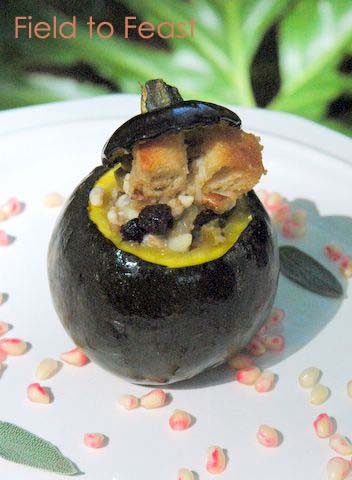 And so gem squash with pomegranate, pecan and parsley stuffing was born. My husband gave me a “you are crazy – you know that, right?” look as I hung my “ornaments” on a string of pine-branch garland for inspiration, and I began cooking.
Gem squash are a common vegetable in southern
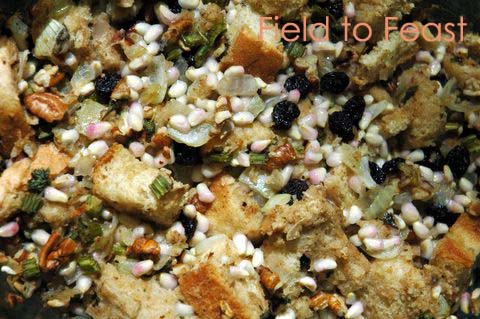 A quick Web search revealed that pomegranate stuffing wasn’t an idea unique to me, although I would hazard a guess that these other cooks weren’t motivated to use pomegranate because it resembles a Christmas ornament. I drew bits from these recipes and combined them with parts of Nic’s vegetarian stuffing recipe to create my own pomegranate stuffing.
Mark may have smirked at my “ornaments,” but he had nothing but compliments for the final stuffed gem squash dish. The pomegranate seeds added a crunchy texture and tart bite to the stuffing, while the flavors of baked squash, sage, and pecan evoked memories of Christmases past. His verdict? “Tastes like the holidays.”
Gem Squash with Pomegranate, Pecan and Parsley Stuffing
Serves 6 as a side dish
6 gem squash
2 teaspoons, plus 1 tablespoon olive oil
¼ teaspoon salt
1 small onion, diced
¼ cup celery, diced
¼ cup fresh parsley, minced
2 teaspoons fresh sage, minced
Salt and freshly ground black pepper, to taste
1 cup pomegranate seeds, plus extra for garnishing
¼ cup raisins
¼ pecans, chopped
3½ cups bread, cubed
½ cup vegetable broth
 Preheat your oven to 350°F/175°C. Slice the top off each squash and scoop out all of the seeds. Use 2 teaspoons of the olive oil to coat the inside cavities of the squash; sprinkle the salt inside, too. Cover the squash bottom with its lid and place on a lightly-greased baking sheet.
Heat the remaining 1 tablespoon of olive oil in a fry pan over medium heat. Add the onion, celery, parsley, sage, salt and pepper, and stir. Sauté for 5 minutes, then remove the pan from the heat.
In a large bowl combine the onion mixture, pomegranate seeds, raisins, pecans and bread cubes. Pour in the vegetable broth and stir carefully until all the bread cubes are moistened (adding more broth, if necessary). Place the stuffing in a lightly-greased, medium-size baking dish and cover with aluminum foil.
Put both the baking sheet with the squash and the baking dish with the stuffing into the oven at the same time. Bake for 20 minutes. Take the aluminum foil off of the stuffing and check the squash to see if they need to be basted with more olive oil. Return both items to the oven and cook for another 20 minutes. The squash should be soft, but still holding its shape, and the bread in the stuffing should look a bit crunchy.
To serve, fill each squash with the bread stuffing. Any additional stuffing can be served alongside the squash. Use any extra pomegranate seeds as garnish.
This post is an entry in Holiday Cooking with Herbs, a special holiday edition of Weekend Herb Blogging hosted by the amazing Kalyn at Kalyn’s Kitchen. I’ve intended to participate in Kalyn’s landmark food blog event ever since I started Field to Feast, and I’m glad the holidays finally inspired me to take the plunge!
Thursday, November 16, 2006
Okra, I Want to Like Thee
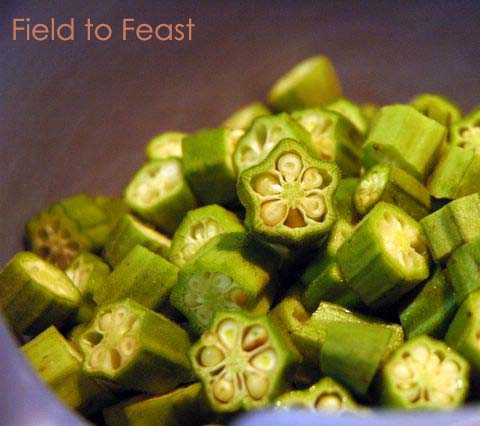
I’ve tried okra fried. I’ve tried it in gumbo. I’ve tried it sautéed with tomatoes. And I have never once enjoyed it. But, to my amazement, I actually found these two dishes to be excellent – full of flavor and cooked so that the okra retains a bit of crunch, a technique which effectively distracts your attention from the vegetable’s slimier tendencies. Both okra recipes make excellent side dishes, and can be served over rice.
Okra with Coconut
Adapted from Mixed Masala: Indian Cookery South African Style
Serves 3-4 as a side dish
½ teaspoon coriander seeds
¼ teaspoon cumin seeds
2 tablespoons vegetable oil
½ teaspoon mustard seeds
250 grams/½ pound fresh okra, sliced into fine rings
1 tablespoon desiccated coconut
2 green chilies, cut lengthwise and then into halves
1 small onion, finely sliced
½ teaspoon salt
 Put the coriander seeds and cumin seeds in a small fry pan over medium heat, and roast lightly. Grind the seeds into powder using a mortar and pestle, and set aside.
Pour the oil into a medium fry pan and set over medium heat. When the oil is hot, add the mustard seeds. Once the mustard seeds begin popping, add the okra. Sauté for 5 minutes, stirring frequently. Turn the heat down to low and add the freshly ground coriander and cumin seeds, desiccated coconut, chilies, onion and salt. Stir. Cover and cook for 10 minutes, or until the okra is tender. Lift the cover occasionally to give the mixture a stir. If the okra is sticking to the bottom of the fry pan, simply add a bit of water.
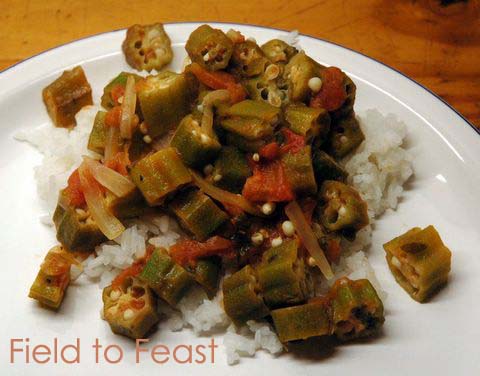 Egyptian Okra Stew (Bamia)
Adapted from Recipe Zaar
Serves 4-6 as a side dish
1 tablespoon olive oil
1 medium onion, cut in half and finely sliced
2 small garlic cloves, minced
1 400-gram/14-ounce can whole peeled tomatoes
Juice of one lemon
1 tablespoon fresh parsley, chopped
1 tablespoon cilantro (a.k.a. fresh coriander), chopped
½ teaspoon ground cardamom
Pinch of salt
¼ teaspoon freshly ground black pepper
700 grams/1½ pounds fresh okra, cut into ½-inch rounds
Heat the olive oil in a medium saucepan over medium heat. Add the onion and garlic, and sauté until the onion is translucent, about five minutes. Add the tomatoes (with their juice), lemon, parsley, cilantro, ground cardamom, salt and pepper, and stir, making sure to break up the tomatoes with the back of your spoon. Simmer for five minutes, stirring frequently. Add the okra and stir. Cook for another ten minutes, or until the okra is tender but not mushy. Serve hot.
One down, two to go. Now does anyone have a particularly enticing papaya preparation to share?
* I must offer the caveat that I don’t eat meat (pork, chicken, or beef). I don’t consider these to be items I don’t like, just foods I choose not to eat!
Saturday, October 21, 2006
Countless Carrots? An Algerian Answer
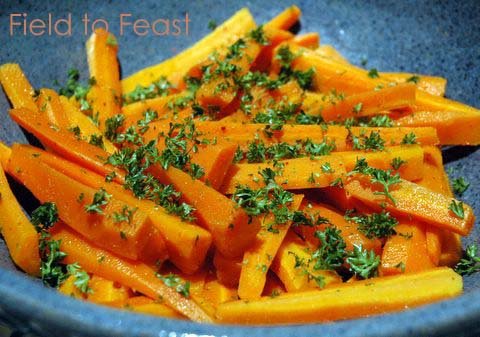 Your neighbor stops by with a basketful of just-picked zucchinis from her bumper crop. You return from the supermarket laden with priced-to-sell tomatoes, so bursting with juicy ripeness that you know, for sure, that the next day they’ll be rotten. Gazing at your overflowing garden, you realize that you forgot to space out the planting of your green beans, and they’ve all appeared at the same darn time. For these situations and more, everyone needs to have at their fingertips recipes that can cope with an overabundance of one particular vegetable.
Adapted from Food by Country
Serves 6
6 garlic cloves, chopped
1 teaspoon salt
½ teaspoon sugar
4 tablespoons fresh lemon juice
1 teaspoon cayenne pepper
½ teaspoon ground cumin
¼ cup fresh parsley, chopped
 Peel the carrots. Cut the skinny sections of the carrots in half lengthwise, and the fatter sections in quarters lengthwise, so that you end up with relatively uniform-width sticks approximately three inches long.
Saturday, October 14, 2006
One Pumpkin, Many Fritters
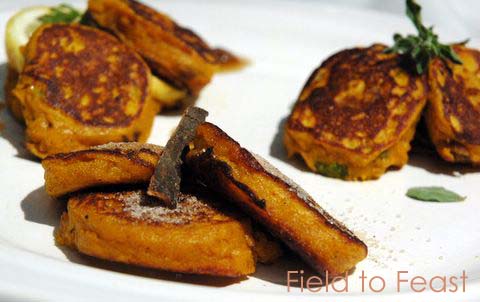 Pumpkins and beets. Before I lived in
I am happy to report that pumpkin also has a life beyond carving and pie here in southern
Since
Pumpkin Fritters
Adapted from Recipe Zaar
Makes about 24 little fritters
Necessities:
2 cups cooked pumpkin
½ cup all-purpose flour
½ teaspoon salt
2 teaspoons baking powder
1 tablespoon plus one teaspoon granulated sugar
2 large eggs
Extra flour, if needed
Vegetable oil, for frying
Option 1 – Sweet (traditional version):
1 teaspoon ground cinnamon
1 teaspoon granulated sugar
Cinnamon sugar, for dusting
Option 2 – Sweet and spicy:
1 teaspoon ground cinnamon
2 tablespoons minced cilantro (a.k.a. fresh coriander)
Juice of one lemon
1 tablespoon mango chutney
1 green chili, minced
Option 3 – Savory:
2 teaspoons roasted garlic paste
Handful chopped fresh herbs of your choosing (I used basil, oregano and marjoram)
Pinch of salt
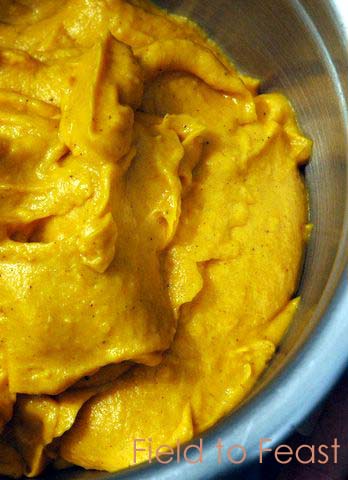 Using a food processor, blend together the pumpkin, flour, salt, baking powder and sugar. Add the eggs and blend until the mixture forms a thick batter that is firm enough to hold its shape when scooped up with a spoon. If the batter is too soft, add some additional flour.
At this point, you can follow one of the options above, or divide your batter into twos or threes and make several different types of fritters. Just mix in the ingredients listed under the option of your choice, reducing the quantities as appropriate if you are dividing up your batter.
Heat the oil in a fry pan over medium heat. Then, drop heaped tablespoons of the batter into the pan, leaving a bit of space between each fritter. Fry the fritters in batches until they are firm and golden on their undersides. Carefully flip over and fry on other side. The fritters are done if you can press them and they spring back, and no batter squishes out from the sides.
Serve fresh from the fry pan, or as Donna via JenJen suggests, cover the fritters that are ready with a clean tea towel as you prepare the subsequent batches. Or, if are cooking other items to accompany the fritters, keep the fritters warm in a 100°C (210°F) oven. If you made option 1, dust your fritters with some cinnamon-sugar. Garnish the other options as you please!
I roasted the pumpkin I used in this recipe, but you could also boil it. If you do boil the pumpkin, ensure it is very dry before you begin making the batter. Note, too, that the possibilities of how to modify your pumpkin fritters are pretty endless. You could add some currants to the sweet fritter, for example, or maybe make a savory one with zucchini (shredded, salted and well-drained) and crumbled feta. Depending on your additions, you may need to blend in extra flour to thicken the batter, or milk to thin it.
This post is an entry in Hay Hay it’s Donna Day #6- F is for Fritter, a food blog event excellently hosted by JenJen of Milk and Cookies.
Sunday, August 06, 2006
Meticulously Moroccan
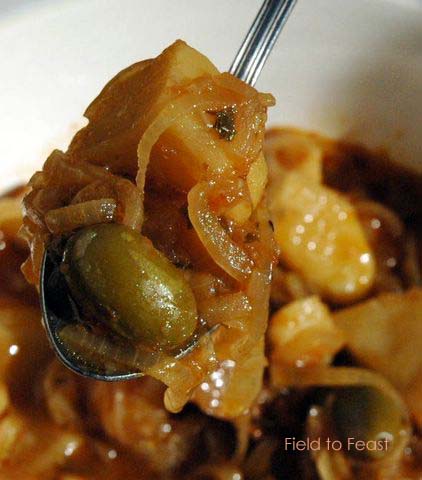 Last year, a friend and I took a series of cooking classes from Mariam, the Moroccan wife of one of my colleagues and an amazing chef. Mariam is a complete perfectionist, and everything perfect is Moroccan, so it was very hard for us to satisfy her exacting standards.
We took turns buying ingredients for our class, for example, and that week’s purchaser had to steel herself for Mariam’s inevitable criticisms. These criticisms always followed a predicable pattern: “You call this ground ginger [or any other ingredient]? Here, smell my ginger. From
One day I was particularly pleased with the olive oil I had found at the shops; it was reasonably priced and imported from
Mariam’s cooking standards were also demanding – one week as I rolled out my dough to make m’semmen she said (approvingly?), “Ah, yes, even Carolyn can do this.” Despite the consistent blows to our egos, we loved every minute of class.
As far as I can tell, the secret to Moroccan cooking is three-fold – never measure, never set a timer and use twice as much paprika, cumin, black pepper and olive oil (preferably all sourced from Morocco) as you consider reasonable. I jotted down this recipe for vegetable tajine based on my observations of Mariam’s innate “feel” for cooking, and have used it numerous times over the past year. Not surprisingly, the dish has never quite approached Mariam standards, but, then again, what would?
Mariam’s Vegetable Tajine
Serves 6
3 cloves garlic, chopped
3 tomatoes, peeled, seeded and chopped
10 small onions, cut in half from top to bottom, and sliced into fine rings
¼ cup chopped fresh parsley
1½ teaspoons ground cumin
1 teaspoon black pepper
1½ teaspoons sweet paprika
¾ teaspoon ground ginger
1 teaspoon salt
Water, as needed
2 pounds of potatoes, peeled and cut into ¾-inch chunks (I use new potatoes and cut them into quarters)
Scant cup green olives
6 quarter-pieces preserved lemon, rinsed and patted dry
Heat oil in a large saucepan over medium-high heat. (If you are lucky enough to have a traditional tajine pot at your disposal, by all means – use it!) Add the garlic, tomatoes, onions, parsley, spices and salt, and stir. Cook for 15 minutes, stirring frequently. If the mixture begins sticking to the bottom of the pan, add a little water. Meanwhile, soak the potatoes in water.
When the fifteen minutes are up, drain the potatoes and add them to the pan. Pour in enough water to submerge the mixture and stir. Cover the pot and bring the mixture to a boil. Add the remaining tablespoon of olive oil. Turn the heat down to medium-low, re-cover and simmer until the potatoes are soft, about 40 minutes. Place the green olives and preserved lemons (skin-side up) on top of the mixture and recover the pot. Cook for another 8 minutes.
Serve in bowls accompanied by bread to sop up all the lemony-tomatoey juice. Warning: Only eat the preserved lemons if you are brave! In fact, you might want to remove them from the dish before serving to avoid any accidents.
*Mariam uses 1 cup of olive oil in her tajine, but I find 2/3 cup is plenty.


