
 Is there a mundane life task that, for reasons known only to your subconscious, gives you immense satisfaction? For example, some people are pleased as punch when they can tick items off their to-do list. I know because I am one of them. I also get a strange pleasure from putting leftovers in just the right size Tupperware container. Seriously. And, I love, love, LOVE blending. Something about taking a few flavors that complement each other, giving them a little whizz with the food processor or immersion blender, adding a bit of this or a dash of that, and, of course, consuming the final product…it just fills me with glee. If I ever right a book about food, it will be called Soups, Smoothies, Dips and Other Things You Blend.
That’s why, on a Saturday afternoon, I found myself blending together the ingredients for an Ethiopian dish called atar allecha. Usually served with injera, I made the mixture a little thicker than the recipe called for, added a squeeze of lemon to brighten the flavors, and served it as a dip. The color is bright green due to the combination of green split peas and turmeric, and the taste is earthly and wholesome, with a spicy kick.
What a combo: a blended dip and – tick that to-do list! – a post, too. Now, I just need to find a Tupperware to store these leftovers….
Atar Allecha (Ethiopian Spiced Green Spilt Pea Purée)
Adapted from a widely available Internet recipe
1 cup / 200 grams split green peas
1 tablespoon / 15 milliliters vegetable oil
1/3 cup / 50 grams onion, chopped
1/2 teaspoon / 2.5 milliliters turmeric
2 cloves garlic, minced
1/2 teaspoon / 2.5 milliliters salt
1 small hot green pepper, seeds removed and minced
Juice of ½ lemon
Chili powder, for garnish
Soak the peas for one hour. Put them in a pot with plenty of water and bring to a boil. Reduce to a simmer, and cook until the peas are soft – about 30 minutes. Drain, reserving the water. Set aside.
Heat the oil in a medium saucepan over medium heat. Add the onion and garlic and sauté for five minutes. Add the peas, turmeric, salt, and chili. Mix well. Add ¾ cup of the reserved water, stir and cook for 3-4 minutes. Take off the heat and blend with an immersion blender. Add more reserved water as needed to obtain the dip consistency that you prefer. Add the lemon juice and stir. Serve warm or at room temperature, topped with a light dusting of chili powder.
Tuesday, September 30, 2008
A Dip, Blended and Bright Green
Sunday, February 11, 2007
Media, Meat, Mushrooms
 Last Wednesday, The New York Times published an excellent article about Zimbabwe, written by Michael Wines. If you read this blog and wonder about the deteriorating economic and political situation in the country where I live, this balanced, perceptive and accurate article is a great place to gain an overview.
Articles that are heavy on shock value and light on analysis and perspective do a disservice to the Zimbabwean people by portraying them as hopelessly desperate rather than as people trying to live happy, peaceful lives enriched by friends and family. How much more useful would it be for an article to look at the reasons why meat and other foods have become so unaffordable, the variety of coping mechanisms people are using to deal with poverty and hunger, and the resulting implications for people’s health and nutrition? These coping mechanisms are much more diverse that simply eating pet food, and their impact can be much more tragic. Recently, for example, five family members from a
Despite the recent tragedy, and although most Zimbabweans favor meat, eating mushrooms as a meat substitute is common, especially during the rainy season when wild mushrooms are relatively plentiful. There are several types of wild mushrooms that can be safety eaten. One type, called chihombiro, is a particularly substantial, chewy mushroom. Chihombiro are are most commonly sold by women and children along the road to and from Nyanga – a mountainous district that abuts
Mark and I don’t eat red meat, so we use mushrooms in place of meat as a personal choice rather than as a less preferable alterative. Last night, I used chihombiro as a substitute for meat in an Ethiopian-inspired recipe for Stir-Fried Beef Stew from Marcus Samuelsson’s The Soul of a New Cuisine: A Discovery of the Foods and Flavors of Africa. This dish is Samuelsson’s version of the traditional Ethiopian dish, tibs w’et, a spicy stew made from beef or lamb. He notes that calling this dish a “stew” is a bit of a misnomer. I agree. Not only is it quick-cooking, but it contains little liquid and couldn’t possibly be eaten by the bowlful – it needs a grain-based accompaniment to temper its dark, rich flavors.
 Tibs w’et is quite spicy – so be wary if you are spice-averse and be sure to reduce the amount of berbere and green chili. You can substitute chili powder for the berbere if you wish, or refer to my previous recipe for Ethiopian Lentil Stew to make your own. Traditionally, this dish is made with nir’ir quibe, or spiced clarified butter. I simply used clarified butter (a.k.a. ghee), and you could also substitute unsalted butter. In
Make sure to use a meaty sort of mushroom as your beef/lamb substitute, such as porcini, shitake or crimini. If you would like to make Samuelsson’s beef version of this recipe, exchange 1½ pounds beef tenderloin, cut into ½-inch cubes, for the mushrooms. I suspect your dish might yield more servings this way.
Adapted from “Stir-fried Beef Stew” in The Soul of a New Cuisine
Serves 2
75 grams / ¾ cup red onions, thinly sliced
300 grams / 3 cups “meaty” mushrooms, chopped
5 milliliters / 1 teaspoon salt
15 milliliters / 1 tablespoon berbere, or chili powder
2½ milliliters / ½ teaspoon ground cardamom
2½ milliliters /½ teaspoon ground ginger
1¼ milliliters / ¼ teaspoon ground cumin
Pinch ground cloves
1¼ milliliters / ¼ teaspoon freshly ground black pepper
3 garlic cloves, chopped
1 400-gram / 14-ounce can whole peeled tomatoes, drained and roughly chopped
2 green chilies, seeds and ribs removed, thinly sliced
125 milliliters / ½ dry red wine
Saturday, September 09, 2006
Ethiopian Lentil Stew and an Analogy
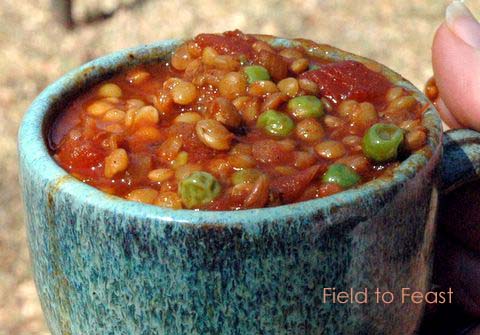 If you went to college in the States, you are sure to shudder at the memory of analogies. Analogies are the word pair bane of your existence that, until 2005, dominated the verbal section of the SAT – the entrance exam required by most colleges in the country. For some reason, the exam writers believed that students’ ability to understand the relationship between two words was an effective way of predicting future academic success. The test would provide a word pair, such as “chef : food,” and you needed to review a list of other word pairs and ascertain which of these pairs shared a similar relationship to the given pair. In this case, “carpenter : wood” would do, for example. Chef is to food as carpenter is to wood. Clear as mud, yes?
Not surprisingly, I have spent nary a second thinking about analogies since I took the dreaded SAT. That is, until I embarked on a search for a recipe for yemiser w'et, an Ethiopian lentil stew. Every recipe reminded me of Russian nesting dolls because in order to make the main recipe, you first had to make at least two other, smaller recipes. Ergo:
“Russian nesting dolls : Ethiopian lentil stew” as “Recipe : Dish.”
 The yemiser w'et recipes I found all required berbere (a spice mixture) and niter kebbeh (spiced ghee). Now, I don’t know about you, but berbere and nitar kebbah aren’t usually on the shelf at my local supermarket. After consulting with Recipe Zaar and Food and Home Entertaining, I combined recipes for these two ingredients with several recipes for the main dish to develop the one consolidated yemiser w'et recipe below. It looks more complicated than it actually is – many of the ingredients are spices that you simply measure and add. Once finished, you’ll have a delicious, spice-infused tomato, lentil and green pea stew. One recipe, one dish. No Russian nesting dolls.
Ethiopian Lentil Stew (Yemiser W'et)
Serves 8
SPICED GHEE
½ cup ghee (use vegetable oil as a substitute)
2 tablespoons chopped onion
1 garlic clove, minced
½ teaspoon fresh ginger, grated
¼ teaspoon turmeric
2 cardamom pods, crushed
1 small cinnamon stick
1/8 teaspoon fenugreek seeds
3 leaves fresh basil
LENTILS
2 cups dried brown lentils, picked over
4½ cups water
BERBERE
3 teaspoons cumin seeds
1 teaspoon ground cardamom
¼ teaspoon whole allspice
1 teaspoon fenugreek seeds
1 teaspoon coriander seeds
8 cloves
1 teaspoon black peppercorns
15 dried red chilies, crushed
¼ teaspoon ground ginger
¼ teaspoon ground cinnamon
1 teaspoon ground turmeric
3 tablespoons plus 1 teaspoon sweet paprika
1 teaspoon salt
STEW
2 cups onions, chopped
4 cloves garlic, minced
4 cups tomatoes, chopped
1 cup tomato paste
2 cups vegetable stock
2 cups fresh green peas (or frozen peas, defrosted)
Salt and pepper, to taste
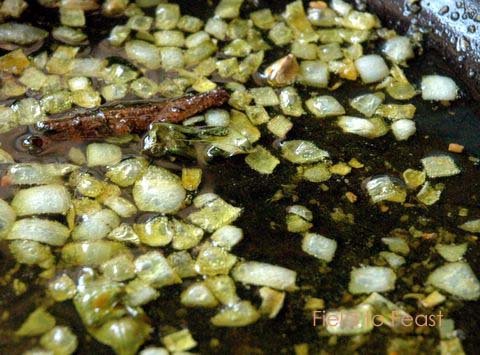 Put the ghee in a small fry pan over medium heat. Add all the ingredients listed and turn the heat to low. Simmer for 30 minutes.
Meanwhile, rinse the lentils and put them in a pot with the water. Bring to a boil, lower heat to a very gentle simmer, and cook, partially covered, for 25 minutes or until tender. (If the lentils are tender and there is still water remaining in the pot, simply drain.) Set the lentils aside.
Next, prepare the berbere. The spice mixture is very strong, so it is a good idea to open all the windows in the kitchen; otherwise, you may have a coughing and sneezing fit. Put a fry pan over medium-high heat and add all the spices listed (except the salt). Cook for 2 minutes, stirring constantly. Add the salt, and grind all the spices in a spice grinder, or with a mortar and pestle.
At this point, your ghee should be almost ready. Strain the mixture using a cheesecloth and discard the solids. Return the newly-spiced ghee to medium heat in a large saucepan, and begin to make your stew. Add the onions and garlic to the spiced ghee and sauté until the onions are just translucent, about 5 minutes. Add 3 teaspoons of the berbere (saving the rest for the next time you make this dish!) and sauté for a few minutes more, stirring occasionally to prevent burning.
Mix in the chopped tomatoes and tomato paste and simmer for another 8 minutes, stirring occasionally. Add the vegetable stock and the cooked lentils, and continue simmering and stirring for 10 minutes. Add the green peas and cook for an additional 5 minutes. Season with salt and black pepper, and you are finished!
Yemiser w'et is typically served with injera bread – the Ethiopian mealtime staple made with teff, the smallest grain in the world. This bread always reminds me of an undercooked pancake, which is not a good thing. So, as an alternative, I served the lentil stew with some Indian rotis we had on hand. Pita bread or tortillas would also work well. Since the stew is often accompanied with yogurt or cottage cheese, I spread smooth cream cheese on the rotis, and we used them to scoop up the stew.
“Chili : Spicy” as “Yemiser w'et : Yum.”


