
 My husband writes music reviews, which means I have the opportunity to hear a lot of good music...and a lot of, well, music that I don’t love. I also get to stare at Mark in awe as he confidently describes albums as “angular artrock” or “Japanese instru-metal.” Angular WHAT? Japanese HOW? It is strange to hear someone you know so well put together phrases that you completely and utterly don’t understand.
Food imagery is rarely as impenetrably obtuse, but the craft of describing food and describing music are not that dissimilar. Both involve allusions and metaphors, evoke your senses, and, in the end, reflect just as much about the describer as the described. Although I usually lack the vocabulary and reference points to express more than a gut-level like or dislike of music, I occasionally try to impress my husband by, for example, telling him that a singer-songwriter sounds like what would happen if Iron & Wine shouted instead of whispered. Could fool you into thinking I know what I am talking about, now couldn’t I?
Mark, in return, shares his insights about food. Like when, after tasting this soup from Morocco, he quickly exclaimed – “It’s like grown-up Spaghetti-Os!” Sweetened by squash, freshened with lemon, and sustained by dainty pasta strands instead of Os – why yes, yes chorba bil matisha does taste a bit like grown-up Spaghetti-Os. Although this easy-to-prepare Kitty Morse recipe may not be as thought-provoking as angular artrock or Japanese instru-metal, it deftly transcends the seeming average-ness of pureed tomatoes and squash through the inspired addition of cilantro, celery leaves and cloves. Like new music from The Old Ceremony, Roman Candle, Sara Bareilles, Bobby Bare Jr., The Be Good Tanyas, and The Crooked Jades, it will join our regular playlist.
Chorba Bil Matisha
Adapted from The Vegetarian Table: North Africa
Serves 4 generously
1 onion
4 whole cloves
6 cups / 1.5 liters vegetable broth
2 pounds / 1.2 kilograms butternut squash, peeled, seeded and cut into small chunks
4 celery stalks, including leaves, coarsely chopped
5 tomatoes, quartered
12 fresh cilantro (a.k.a. coriander) sprigs
¼ teaspoon / 1.25 milliliters ground turmeric
½ cup / 50 grams angel hair pasta, broken into 2-inch / 5-centimeter pieces
½ cup / 125 milliliters milk
Salt and freshly ground black pepper, to taste
Lemon wedges
Stud the onion with the cloves. In a large saucepan, combine the onion, broth, squash, celery, tomatoes, cilantro and turmeric. Cover and bring to a boil. Reduce heat to medium and cook until the vegetables are tender, 30-40 minutes. Take the pot off of the heat and discard the onion with its cloves.
Use an immersion blender to puree the vegetables and broth until smooth. Return to heat and add the pasta. Simmer until the pasta is tender, about 6-8 minutes. Turn off the heat, stir in the milk, and season with salt and pepper. Serve immediately, with lemon wedges.
Sunday, October 07, 2007
Grown-up Spaghetti-Os
Sunday, September 23, 2007
Keep Christmas with You
 Remember that Muppets song with the line “Keep Christmas with you, all through the year?” Well, that is exactly what we aspire to here in our household. Far from home, relatives, snowflakes, and last-minute shopping, December 25th – for better or for worse – is sapped of the giddy bustle, familial drama, and no-holds barred commercialism that typifies the holiday in the States. Thankfully, through, Mark and I can experience other calendar days filled with the heady anticipation of a receiving a gift you know you will love and welcoming friends who you haven’t seen for a week, or a month or even several years.
Slightly adapted from The Vegetarian Table: North Africa
Serves 4
1/3 cup / 40 grams cornstarch (a.k.a. cornflour)
3 cups / 750 milliliters milk
¼ cup / 40 grams sugar
1 cinnamon stick
2 tablespoons / 30 milliliters orange flower, rose, or rose geranium water
½ cup / 45 grams almonds, toasted pine nuts or pistachio nuts, crushed
1 cup / 250 grams fresh berries
In a small bowl, dilute the cornstarch with ½ cup / 125 milliliters of the milk. Set aside. In a heavy, medium saucepan, bring the remaining 2½ cups / 625 milliliters milk, along with the sugar and cinnamon stick, to a boil. Add the cornstarch mixture. Whisk continuously until the mixture thickens, about 5 minutes. Remove from the heat and remove the cinnamon stick. Stir in the orange flower, rose, or rose geranium water. Pour into individual ramekins or parfait glasses. Refrigerate to chill.
Before serving, sprinkle with the nuts and garnish with fresh berries.
Sunday, July 29, 2007
One Veggie Star

Serves 4 as a salad
3¼ cups / 500 grams zucchini (a.k.a. courgette, baby marrow), very thinly sliced
1½ teaspoons / 7.5 milliliters ground cumin
2 teaspoons / 10 milliliters sweet paprika
Pinch of cayenne
¼ teaspoon / 1¼ milliliters salt
2 cloves of garlic, minced
1 tablespoons / 15 milliliters olive oil
2½ tablespoons / 37.5 milliliters fresh lemon juice
2 tablespoons / 30 milliliters vegetable broth (you can use water)
Handful minced fresh parsley, plus more for garnish
Monday, May 28, 2007
I’m Back, with Bread

Instead, I stepped off the plane excited to simply drink water straight from the tap without the tedium of boiling and filtering. Which meant I was dumbstruck by the innocently-posed question: “So, what flavor water would you like?” Um, the watery water flavor?
My first visit home three years ago was marked by a similarly perplexing experience.
I joined the lunchtime line at Bruegger's, very excited about eating my first bagel in more than a year. (However inauthentic you may think Bruegger's bagels are, they are the epitome of bagel-dom after viewing what passes for a bagel in Australia.) There I was, grappling with the deep “Everything? Or whole grain?” question, when I overheard a snippet of conservation. The store manager was commenting to his assistant, “I get asked to make those all the time now.” I followed his gaze until I spotted a bagel, plain, being totally eviscerated. As I stared, the assistant used his plastic-gloved finger to tear the entire inside bread from the bagel crust. He proceeded to layer sandwich fillings onto a bread-less bagel half.
What? A bread-less bagel? What is going on?
And then it hit me, the phenomenon I had missed while I was away: Atkins.
So, today, in honor of “catch-me-dumbstruck” food moments past, present and future, I offer you an extremely bready, completely anti-Atkins, Moroccan bread. Which I recommend you serve with tap water.
Moroccan Flatbread with Yeast (Batbout M’Khamer)
Slightly adapted From World Vegetarian
Makes 5
1 teaspoon / 5 milliliters active dry yeast
½ teaspoon / 2.5 milliliters sugar
1¾ cups / 210 grams unbleached, all-purpose white flour
1½ cups / 300 grams fine semolina flour
1½ teaspoons / 7.5 milliliters salt
Olive oil
Combine the yeast, sugar and 2 tablespoons of warm water in a small bowl. Stir to dissolve completely. Set aside for 5 minutes, or until the yeast begins to bubble.
Meanwhile, in a large bowl, mound the white flour and the semolina flour into the shape of a small hill. Hollow a crater on the hilltop and put the salt and the yeast mixture into it. Now slowly pour warm water into the crater. You will need about 1 cup of warm water, or slightly more. As you add the water, slowly gather the flour together into a ball. Keep adding the water a little at a time while gathering the dough, until the dough begins to form a soft, smooth ball. Once you can form a ball, begin to knead. Knead the dough for about 10 minutes, or until it is smooth and elastic. Form a ball.
Lightly grease a large, flat platter with the olive oil and set it aside. Coat your hands slightly with the oil. Break the dough into 5 equal, smooth balls. Place the balls on the oiled plate a good distance from one another. Cover with a clean dishcloth and set in a warm place for 5 to 10 minutes.
Lightly grease your countertop. Take one ball and, with the flat part of your fingers, flatten it out until it is 1/4-inch / 6-millimeters thick and 6 inches / 15.5 centimeters in diameter. (Note: Mine ended up slightly larger at this thickness.) Follow the same procedure with all of the balls. Cover the flatbreads with a clean dishcloth and set them aside for 1 hour.
Set a large, cast-iron frying pan over medium heat and let it get very hot. Pick up one flatbread and lay it in the center of the frying pan. Cook for 1 minute. Turn the bread over and cook for another minute. Now turn the bread over four more times, cooking each side for just 30 seconds. The bread should have some toasty brown spots on each side. Then stand the bread in the pan as if it were a wheel, and, using an oven mitt, hold one side of the bread with your thumb, and the other side with your middle finger. Slowly rotate the bread, just like a wheel, and lightly cook the edges for 1 minute. Place the flatbread on a dishcloth, and wrap it up. Make all the breads this way, stacking them on top of each other, and covering them each time. The bread will stay warm for about 30 minutes.
This recipe comes from Madhur Jaffrey, and she describes the bread as pita-like. Indeed, Mark and I tore them into two skinny flat pieces and used them to scoop up curry. You could also make a pocket and stuff it with your favorite sandwich filling. If you have leftovers, store them in tinfoil and simply pop them in the toaster oven the next day.
Sunday, March 04, 2007
Rotating Veggies, Roasted

Adapted from Sprigs: Fresh Kitchen Inspiration
Serves 8 or more
2 medium eggplants (a.k.a. brinjals, aubergines), cut into 12 millimeter / ½-inch cubes
2 onions, cut into wedges
1 green pepper, thickly sliced
6 carrots, cut into 12 millimeter / ½-inch slices
300 grams / 2 2/3 cups green beans, cut into 2-inch pieces
1 400-gram / 14-ounce can chickpeas, rinsed and drained
4 garlic cloves, crushed
45 milliliters / 3 tablespoons olive oil
20 milliliters / 4 teaspoons coriander seeds, freshly ground
5 milliliters / 1 teaspoon ground allspice
300 milliliters / 1 1/3 cup tomato paste
Salt and freshly ground black pepper, to taste
30 milliliters / 2 tablespoons cilantro (a.k.a. fresh coriander) and/or parsley, chopped, plus more for garnish
200 grams / 1 1/3 cup feta cheese, crumbled, plus more for garnish
Saturday, November 04, 2006
Couscous Cool Down
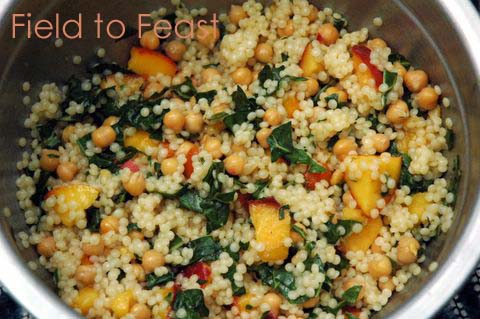
It is hot, bloody hot. The sun is doing its best to suck away my last bit of energy and the afternoon humidity has induced a permanent state of sweat. It is well past lunchtime, and I refuse to cook. Or move very much.
My only option, and a welcome one it is, is to prepare my favorite couscous salad. This dish has only one heat-inducing step – boiling the water to pour over the dry couscous. After that, all you are required to do is whisk together a Mexican-spiced dressing spiked with lime, chop up some nectarines and a handful of spinach, and open up a can of chickpeas. The nectarine cools you off, the citrus wakes you up and the whole ensemble is light and invigorating.
Serves 6 as a side dish or light lunch
1 cup uncooked (dried) couscous
1¼ cups water
4 tablespoons fresh lime juice
2 tablespoons olive oil
2 tablespoons honey
1 teaspoon salt
1 teaspoon ground cumin
1 teaspoon ground coriander
1½ cups nectarines, coarsely chopped (about 3 medium)
¾ cup coarsely chopped spinach (I used Swiss chard this time)
1 can (15½ ounces) chickpeas, rinsed and drained
Lettuce leaves, for serving
Pour the couscous into a small bowl. Bring the water to a boil and pour it over the couscous. Cover the bowl with plastic wrap or a plate, and let it sit for at least five minutes. Fluff the couscous with a fork and let cool.
Whisk together the lime juice, olive oil, honey, salt, cumin and coriander in a large bowl. Add the couscous, nectarines, spinach and chickpeas. Toss well, and serve mounded on lettuce leaves.
Sunday, August 06, 2006
Meticulously Moroccan
 Last year, a friend and I took a series of cooking classes from Mariam, the Moroccan wife of one of my colleagues and an amazing chef. Mariam is a complete perfectionist, and everything perfect is Moroccan, so it was very hard for us to satisfy her exacting standards.
We took turns buying ingredients for our class, for example, and that week’s purchaser had to steel herself for Mariam’s inevitable criticisms. These criticisms always followed a predicable pattern: “You call this ground ginger [or any other ingredient]? Here, smell my ginger. From
One day I was particularly pleased with the olive oil I had found at the shops; it was reasonably priced and imported from
Mariam’s cooking standards were also demanding – one week as I rolled out my dough to make m’semmen she said (approvingly?), “Ah, yes, even Carolyn can do this.” Despite the consistent blows to our egos, we loved every minute of class.
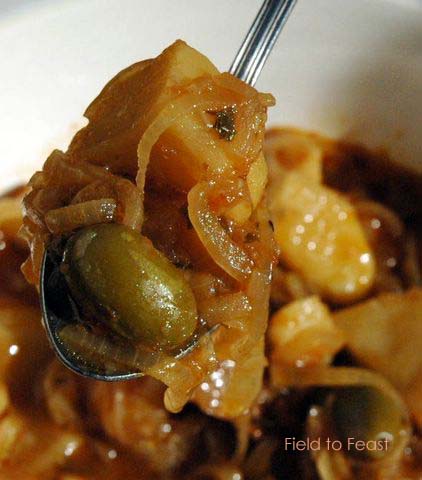
As far as I can tell, the secret to Moroccan cooking is three-fold – never measure, never set a timer and use twice as much paprika, cumin, black pepper and olive oil (preferably all sourced from Morocco) as you consider reasonable. I jotted down this recipe for vegetable tajine based on my observations of Mariam’s innate “feel” for cooking, and have used it numerous times over the past year. Not surprisingly, the dish has never quite approached Mariam standards, but, then again, what would?
Mariam’s Vegetable Tajine
Serves 6
3 cloves garlic, chopped
3 tomatoes, peeled, seeded and chopped
10 small onions, cut in half from top to bottom, and sliced into fine rings
¼ cup chopped fresh parsley
1½ teaspoons ground cumin
1 teaspoon black pepper
1½ teaspoons sweet paprika
¾ teaspoon ground ginger
1 teaspoon salt
Water, as needed
2 pounds of potatoes, peeled and cut into ¾-inch chunks (I use new potatoes and cut them into quarters)
Scant cup green olives
6 quarter-pieces preserved lemon, rinsed and patted dry
Heat oil in a large saucepan over medium-high heat. (If you are lucky enough to have a traditional tajine pot at your disposal, by all means – use it!) Add the garlic, tomatoes, onions, parsley, spices and salt, and stir. Cook for 15 minutes, stirring frequently. If the mixture begins sticking to the bottom of the pan, add a little water. Meanwhile, soak the potatoes in water.
When the fifteen minutes are up, drain the potatoes and add them to the pan. Pour in enough water to submerge the mixture and stir. Cover the pot and bring the mixture to a boil. Add the remaining tablespoon of olive oil. Turn the heat down to medium-low, re-cover and simmer until the potatoes are soft, about 40 minutes. Place the green olives and preserved lemons (skin-side up) on top of the mixture and recover the pot. Cook for another 8 minutes.
Serve in bowls accompanied by bread to sop up all the lemony-tomatoey juice. Warning: Only eat the preserved lemons if you are brave! In fact, you might want to remove them from the dish before serving to avoid any accidents.
*Mariam uses 1 cup of olive oil in her tajine, but I find 2/3 cup is plenty.


