
 A few months ago, my friend Ruth (yes, the Ruth of rooibos chocolate cake and buamba fame), handed me a small, square, well-worn booklet, stored in a protective Ziploc bag. “The cookbook I was telling you about – the one compiled by missionaries where I grew up in central Zaire. I think you will like it.”
Like it I do. The recipes in Babula Cooking III (named after the Tshiluba word for a small charcoal stove) come from the kitchens of about two dozen women, and bear cozy, homespun names such as “My Best Gingerbread,” “Crazy Cake”, “Company Pudding,” “2-Minute Mayonnaise,” “Eggplant Supreme,” and “Mother Merle’s Corn Soup.” But Babula Cooking is more than an Africanized Garden Club cookbook – it is also a survival guide for wives and mothers far from supermarkets and reliable refrigeration. It contains handy tips for improving the taste of powdered milk (add vanilla and a pinch of salt), keeping (or getting) bugs out of dry goods like flour, rice and beans, and preserving meat through canning and corning. And the recipes themselves speak to these women’s amazing flexibility to devise substitutions and re-create the smells and tastes of home.
Lack ketchup? Try puréed tomatoes with sugar and vinegar. Don’t have garlic? “From the forest come leaves and bark with a very pungent odor quite like garlic. [The locals] mix crushed leaves or powdered bark with red pepper and salt.” Here, in the jungle of Zaire, missionary women prepare gravy with palm oil, employ dioshe, a common squash, in “pumpkin” bread, and use papayas to make jam “almost like peach jam.” Meri-meri (a local berry) are the sweetly tart secret in muffins, cobblers and jelly, while mangoes fill in for apples in cobbler, pie, sauce and butter. In a display of thrift, leftover oatmeal and rice get transformed into muffins, and eggplant is grated, browed and mixed with ground meat as a “meat stretcher.” “Philadelphia cream cheese” is concocted with drained yogurt.
Babula Cooking is not all Mid-West-cum-central-Africa. The women also incorporate local recipes into their personal repertoires. Aurie Miller, one of the editors, provides this introduction to her recipe for bidia, a stiff porridge made from cornmeal and manioc (cassava) flour:
“African women do not measure but know how many handfuls to put in from long practice. They laugh hilariously when they hear there is a recipe! It would be well for you to watch someone whose bidia you like to figure out your own proportions….” Marcia Murray adds that bidia can then be cubed and fried: “Eaten with salt and catsup,” she notes, “They are like hush puppies.”
This, the third edition of Babula Cooking, was published in 1985. In the foreword, the editors write: “Our hope is that we become less dependent on the expensive imported foods and simplify our lives as we live among those who have so much less than we.” In the era of food miles and food riots, it is a message for us all.
So, instead of having my mom send me a care package of graham crackers, I tried out Janette Fulton’s homemade version. I found it hard to roll the dough thin enough, so they didn’t have the right crunch, and the texture was a bit too crumbly…but the taste? Well, I’ll be darned if they didn’t taste like the real deal.
Honey Graham Crackers
From Babula Cooking III
Makes 24 crackers
2 cups / 240 grams flour
½ cup / 60 grams whole wheat flour
1/3 cup / 57 grams brown sugar
½ cup / 113 grams shortening (I used butter)
¼ cup / 60 milliliters honey
¼ cup / 60 milliliters oil
3 tablespoons / 45 milliliters cold water
1 teaspoon / 5 milliliters salt
1 teaspoon / 5 milliliters baking soda
Preheat oven to 425°F / 220°C. Stir all ingredients together until well-blended. Roll out on two lightly oiled cookie sheets. Score, prick, and bake for 8-10 minutes. Cut apart while hot. Cool and store in tin with tight top.
Sunday, June 29, 2008
Babula Cooking
Sunday, September 23, 2007
Keep Christmas with You
 Remember that Muppets song with the line “Keep Christmas with you, all through the year?” Well, that is exactly what we aspire to here in our household. Far from home, relatives, snowflakes, and last-minute shopping, December 25th – for better or for worse – is sapped of the giddy bustle, familial drama, and no-holds barred commercialism that typifies the holiday in the States. Thankfully, through, Mark and I can experience other calendar days filled with the heady anticipation of a receiving a gift you know you will love and welcoming friends who you haven’t seen for a week, or a month or even several years.
Slightly adapted from The Vegetarian Table: North Africa
Serves 4
1/3 cup / 40 grams cornstarch (a.k.a. cornflour)
3 cups / 750 milliliters milk
¼ cup / 40 grams sugar
1 cinnamon stick
2 tablespoons / 30 milliliters orange flower, rose, or rose geranium water
½ cup / 45 grams almonds, toasted pine nuts or pistachio nuts, crushed
1 cup / 250 grams fresh berries
In a small bowl, dilute the cornstarch with ½ cup / 125 milliliters of the milk. Set aside. In a heavy, medium saucepan, bring the remaining 2½ cups / 625 milliliters milk, along with the sugar and cinnamon stick, to a boil. Add the cornstarch mixture. Whisk continuously until the mixture thickens, about 5 minutes. Remove from the heat and remove the cinnamon stick. Stir in the orange flower, rose, or rose geranium water. Pour into individual ramekins or parfait glasses. Refrigerate to chill.
Before serving, sprinkle with the nuts and garnish with fresh berries.
Thursday, April 19, 2007
After a Pause, A Pudding
 Greetings from cold, rainy Boston, Massachusetts. Yep, that’s right, I am away from Zimbabwe for the moment and am visiting family and friends in the U.S. I thought I would have lots of free time during my trip, free time during which I would cook many delectable African dishes that would win the admiration of many wary-eyed family members, and that I would transform into many wonderful blog posts. The reality: few items have been cooked and, until now, no posts have been written. Instead, I have been wooed by shopping malls and feted by friends, spent hours of drop-jaw gawking at the amazing offerings of Trader Joe’s, Whole Foods and Wilson Farms, and been re-introduced to the joys of surfing with a fast (as opposed to a 32kbs) internet connection. Ah, the many wonders of the (over)developed world.
 I have squeezed in a bit of cooking – not the elaborate feasts I had a mind, but a few dishes here and there, including these beans, this stew and beetroot pesto pasta. The biggest admirer of every dish has been my 16-month old nephew, who, I’ve learned, will eat and drink absolutely anything. I have seen him gobble up pickles and clams, bite into a fresh lemon, and take a sip of black coffee – and go back each time for another gobble, bite and sip. He may not be discerning, but he is certainly the most adventurous little eater I have ever seen. (Here seen eating the aforementioned pasta).
Thus, it was not surprising that Little Matthew used two hands as he devoured the apricot pudding I made using a recipe from Colette Rossant’s Apricots on the Nile: A Memoir with Recipes. This dish had other family fans, too, including my mom, who was seen eating a bowl for breakfast and claimed the pudding’s intense apricot flavor become better every day. This dish is a great springtime dessert because of its sunny yellow color – I wish I had made it for Easter, in fact. The most fun part of this recipe is seeing how the dried apricots, after being soaked overnight, actually plump up until they are almost the size of fresh apricots. I was amazed!
Without further ado, here is apricot pudding, a recipe I hope will tide you over until I return to Zimbabwe in mid-May…or until I somehow sneak away from the many distractions vying for my attention to cook and write another post!
Apricot Pudding
Slightly adapted from Apricots on the Nile
Serves 6 or more
450 grams / 2 cups dried apricots
6 large eggs
90 milliliters / ¼ cup plus 2 tablespoons heavy cream
30 milliliters / 2 tablespoons rum
150 grams / ¾ cup sugar
Place the pound dried apricots in a bowl, cover them with warm water, and soak overnight. Drain.
Pre-heat the oven to 180° C / 350° F. Place the apricots, eggs, heavy cream, rum and sugar in a food processor. Process until the apricots are puréed. Butter a 1½ liter / 1½ -quart mold, and pour the apricot purée into the mold. Place the mold in a larger pan filled with hot water. Bake for 50-60 minutes, or until the point of a knife inserted in the middle of the pudding comes out clean. Cool.
I’m sure this is pudding heresy, but I didn’t unmold the pudding after it cooled; instead, I served scoops straight from the mold. Unmold if you wish! Rossant suggests garnishing with mint leaves.
Friday, March 23, 2007
Faves on Friday #3: Orange Polenta Cake
 I never speak about my job on this blog, and don’t really plan to (especially not on Fridays!), but forgive a brief reference. One thing I do is help identify, document and share “lessons learned” from my organization’s work, so that we can keep using approaches that are successful and remember not to repeat past mistakes. I thought of this aspect of my job earlier this week, while considering the fact that it has been a couple of months since my last Fave on Friday.
From Food and Home Entertaining, July 2005
Serves 8
125 grams / 1 stick plus 1 scant tablespoon butter, softened
225 grams / 1¼ cup castor (granulated) sugar
3 large eggs
75 grams / ½ cup plus scant tablespoon self-raising flour
75 grams / ½ cup plus scant tablespoon cake flour
125 grams / generous ¾ cup fine polenta
60 grams / generous ½ cup ground almonds
80 grams / 1/3 cup sour cream
Rind of 1 lemon, grated
Rind of 1 orange, grated
60 milliliters / 4 tablespoons freshly squeezed lemon juice
Whole orange syrup
2 whole oranges with skin, thinly sliced
180 grams / ¾ cup plus 2 tablespoons castor sugar
300 milliliters / 1 1/5 cups water
#1: Curried Tomato Soup
#2: Spaghetti with Beetroot Pesto
Monday, February 05, 2007
Eat Your Cake
 Last week, Michael Pollan’s article in The New York Times Magazine had the blogosphere abuzz with its insightful analysis of how Americans eat, why we think about food the way we do, the reasons these viewpoints make us unhappy and unhealthy, and what “healthy eating” in America might really look like. The article is memorable for many reasons – the way it chronicles the American obsession with “nutritionism”; its “well, wouldn’t you lie on the questionnaires, too?” approach to undermining the major longitudinal studies that inform nutrition science; and how it clearly articulates our lack of understanding about how foods interact with one another within the context of an overarching cuisine.
From my friend Ruth (thanks, Ruth!)
Serves 10
2 rooibos tea bags
250 milliliters / 1 cup boiling water
125 milliliters / ½ cup cocoa powder
5 milliliters / 1 teaspoon vanilla extract
125 milliliters / ½ cup vegetable oil
4 eggs, yolks and whites separated
300 grams / 1½ cups sugar
240 grams / 1 2/3 cups plain flour
15 milliliters / 1 tablespoon baking powder
2 milliliters / scant ¼ teaspoon salt
2 rooibos tea bags
400 milliliters / 1 2/3 cups boiling water
200 grams / 1 cup sugar
50 milliliters / 3 tablespoons plus 1 teaspoon butter
50 milliliters / 3 tablespoons plus 1 teaspoon cocoa powder
50 milliliters corn flour (a.k.a. cornstarch)
7 milliliters / scant 1½ teaspoons vanilla extract
1 tin caramel OR 1 can dulce con leche, made this way
Pre-heat the oven to 180°C (350°F).
Steep the rooibos tea bags for the cake in the boiling water for at least 15 minutes, until the tea is quite strong. In a separate bowl or pot, steep the rooibos tea bags and boiling water for the icing, and keep this tea off to the side until later.
Here, you can choose to make a two-layer cake, or a four-layer cake. Clearly, to make four layers, you’ll need to carefully cut each round cake in half! Whichever option you choose, divide your icing between your cake layers and the top of the cake. The icing is quite soft, so some will drip down the sides. Decorate with cherries, chocolate curls or fresh mint leaves.
Wednesday, December 20, 2006
Amarula, and Other Weighty Topics
 In the
“Your face is looking nice and round, are you expecting?”
“You’ve gained weight since I last saw you – now you are becoming an African woman!”
Over the past 20 months in
The logical, rational part of my brain reassures me that such comments are actually compliments on a continent where extra weight means that you are able to purchase plenty of food for your family. In fact, the women who run a craft collective where my husband volunteers recently boasted that, due to the success of their initiative, they had become “fat and fatter.” I’ve also noticed that remarking on a woman’s weight gain – real or not – after a holiday is a cultural courtesy, similar to the way people in the States would tell co-workers that they appear well-rested upon returning from a vacation.
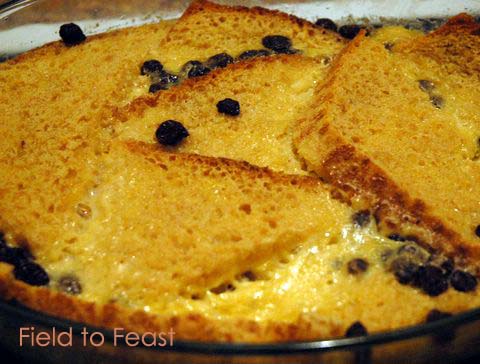
Amarula bread and butter pudding is not a dessert for the faint-hearted, nor for the dieting, as butter, cream and sugar all appear in substantial quantities. It is a warm, comforting dessert – perfect for casual holiday gatherings – with a taste and texture reminiscent of French toast. If you don’t have Amarula, you can easily substitute Bailey’s or Kahlua.
Adapted from the Amarula website and Food and Home Entertaining, May 2001
Serves 10-12
Pudding
50 grams / 3½ tablespoons butter, well-softened
8 slices of soft bread with a soft crust, sliced in half diagonally
50 grams / 1/3 cup raisins, soaked in warm water and drained
500 millilitres / 2 cups milk
375 ml / 1½ cups double cream
5 millilitres / 1 teaspoon vanilla extract
6 large eggs
200 grams / 1 cup castor sugar
125 millilitres / ½ cup Amarula
Custard
500 millilitres / 2 cups milk
2 cinnamon sticks
45 millilitres / 3 tablespoons castor sugar, or to taste
3 egg yolks
15 millilitres / 1 tablespoon cornflour
Wednesday, September 20, 2006
Plethora of Puddings

Are you visualizing Jell-O-brand boxes of packaged chocolate powder and gelatin? Bill Cosby advertisements? Pudding Pops? Chocolate pudding pie at Christmastime?
Yep, you’re an American.
Or, are you fondly recollecting your family’s favorite homemade pudding recipe, and slightly less-than-fondly remembering battles with your sibling over whose turn it was to pour a buttery sauce over the cake-like concoction?
Bet you’re from
How did a single word come to mean one type of dessert in the
In fact, over the centuries, "pudding" has meant many different things to many different people. According to The Food Timeline, the word was first used in medieval times to describe a boiled sausage dish. Lucky for us, puddings made by combining sweet, non-meat ingredients slowly gained in popularity and, by the late 1700s, your typical pudding was a cake-like creation. In the U.S., the introduction of custard powder combined with the skillful marketing of a new, custard-y “pudding” as a health food conspired, during the mid-1800s, to create the pudding we Americans know today.
The most popular South African incarnation of pudding (in the European sense of the word) is called malva pudding. Like a milk tart, malva pudding is a simple, straightforward dessert, easy to whip up for a weeknight treat. Even I – who can’t multi-task and am, shall we say, baking-ly-challenged – was able to pull together one version of malva pudding on Monday as I chatted with friends who had just arrived for dinner, and to prepare another version earlier tonight while my husband (who, by the way, was cooking Botswana chowder) and I shared stories from our day.
The version I liked best is a recipe crafted by the Boschendal Winery and Restaurant, which is located in a lovely spot in the Franschhoek valley, a little over an hour outside of Cape Town. The cake-like part of the pudding is spongy and moist, and the sauce is extremely sweet, although not so sweet so as to give you what Mark terms “sweater-teeth.” If you don’t like desserts that scream “sugar,” however, you might want to modify the recipe below by reducing the amount of sugar in the syrup to ¾ of a cup.
Malva Pudding
Adapted from the Boschendal Winery and Restaurant
Serves 8
1 cup sugar
1 egg
1 tablespoon smooth apricot jam
1 cup cake flour
1 teaspoon baking soda
Generous pinch salt
1 tablespoon butter
1 teaspoon white vinegar
1 cup milk
SAUCE
1 cup heavy cream
½ cup butter
1 cup sugar
½ cup hot water
Pour the batter into an 8-inch diameter Pyrex baking dish and cover with a lid or with aluminum foil. (If you’re using foil, make sure the foil doesn’t rest on the batter.) Bake for 45-60 minutes. You’ll know the pudding is ready when the entire top is a toasty brown color.
 Just before the pudding is finished baking, put the ingredients for the sauce in a small saucepan, and warm over medium heat, stirring frequently, until the butter has melted. Pour this sauce over the pudding as soon as it comes out of the oven. Let the pudding stand for a couple of minutes to allow the sauce to soak in, and then serve with a dollop of cream.
Sunday, September 03, 2006
Any-time Tart
 Pancakes for dinner. Pizza for breakfast. Certain foods assume completely different personalities when eaten at unconventional times of day. I don’t even like pancakes in the morning, but pancakes for dinner? Well, they are a special and welcomed treat. Cold pizza’s coagulated cheese and limp crust may be unabashedly unappealing, but there isn’t any better breakfast on the morning after a late night, and no college kid in the world will tell you differently.
On the other hand, there are some foods that simply transcend all constraints of hour or circumstance – for them, no time of day is particularly special or strange. These dishes are the utility players of your recipe box, the little black dress appropriate for all seasons and every occasion. They are steady, reliable, unassuming, essential.
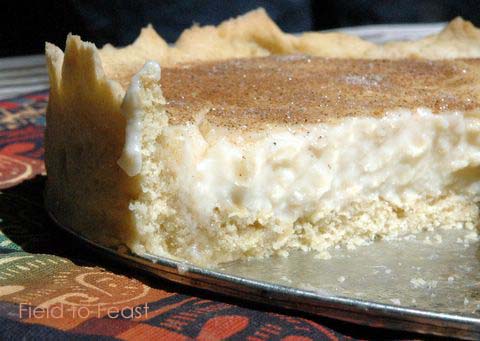
A milk tart is just such a food. Brought to South Africa by Dutch settlers in the late 1600s, melktart is the consummate any-time tart. It is creamy, but not too rich, and only slightly sweet. Although similar to flan or custard pie, a milk tart has a much more prominent milk flavor. It could be your breakfast tart, tea-time tart, afternoon picnic tart or midnight snack tart. Top with some poached pears or candied ginger and it could become your gourmet impress the in-laws dessert tart. Today, it was our after-tennis, pre-lunch tart. And, since the recipe below makes two tarts, it can also be our bring to tonight’s potluck dinner tart. Delicious, every time.
Milk Tart
Adapted from Food and Home Entertaining, June 2006
Makes two tarts
PASTRY
125 grams butter
100 grams sugar
2 eggs
250 grams cake flour
10 milliliters / 2 teaspoons baking powder
Pinch of salt
FILLING
1.2 liters / 4 4/5 cups whole milk
50 grams butter
3 eggs
50 grams cake flour
50 grams corn flour
160 grams sugar
10 milliliters / 2 teaspoons vanilla essence
Generous pinch ground ginger
Pinch of ground cinnamon
Pinch of salt
TOPPING
10 milliliters / 1 teaspoon ground cinnamon
70 milliliters / 2½ tablespoons sugar
Preheat your oven to 180 degrees Celsius, or 360 degrees Fahrenheit. To make the pastry, cream the butter and sugar in a medium bowl until fluffy. Lightly beat the eggs, and add them to the bowl. Sift in the cake flour, baking powder and salt and stir the mixture to form a dough. Divide the dough into two pieces. On a lightly floured surface, roll out each piece of dough so that it fits into its own 23-centimeter (9-inch) pie dish. (I used two spring-form pans instead.) Prick the dough on the bottom of each dish several times with a fork. Bake the pastry for 10-12 minutes until very lightly brown.
To make the filling, pour the milk into a medium saucepan and add the butter. Bring to a boil and quickly remove from the heat. In a medium bowl, mix together the eggs, flour, corn flour, sugar, vanilla essence, ground ginger, ground cinnamon and salt. Add this mixture to the saucepan, and return to the heat. Bring to a boil once again, then remove from the heat. The mixture will be very thick and custard-like.
Pour the filling equally into the two prepared pastry crusts. Cool completely, then refrigerate until set. Mix together the ground cinnamon and sugar and sprinkle over the milk tarts. Serve.
Wednesday, August 30, 2006
Five Things
 Melissa of The Traveler’s Lunchbox has issued a daunting challenge to food bloggers, and Anna from Morsels & Musings has dared me to meet it. The challenge? To recommend five foods – and five foods only – that everyone should eat once before they die.
I quickly realized this task required much more than a simple bulleted list, for it wasn’t only food items vying for a spot on my top five, but the stories behind them. After all, much of a food’s value and significance comes from its personal meaning and societal context – the source of the ingredients or recipe, the location where you eat the food, how the food is eaten, and who you are eating it with. Sure, burritos are good, and everyone should eat one pre-Grim Reaper, but a guacamole burrito from Carrburritos in
What makes a particular food item memorable is different for every person. My “five things to eat before you die” will not make your list unless, after eating them, you, too, have a story to tell.
Milk from a cow. All you Louis Pasteur fans may not be with me on this one, but once you’ve had milk straight from the cow, you realize milk from a carton is a totally different species. It’s like one version should be called cow milk, and one should be called store milk. Where does store milk come from? The store. Where does cow milk come from? The cow. And you know this because cow milk tastes, well, slightly cow-y, and it is warm because, well, it has just been inside the cow, and it is creamy because it has all the fat the cows put there naturally. Try some.
Custard apple with blue cheese. Do you ever wonder how certain food combinations came to be? Who was the first person who tried popcorn with butter? Peanut butter and jelly? Rice and beans? Muesli with yogurt? Well, I can tell you exactly how this food combination, soon to take the world by storm, was created. One Saturday morning in
An ice cream cone at Maple View Farms in Chapel Hill, North Carolina. Lick your cone while lazily swaying back and forth on your wooden rocking chair, gazing over the field where the cows who contributed to your happiness graze and chew their cud. To make the homemade ice cream taste even better, go to Maple View on the day before your wedding, and have your husband-to-be read from a list he has written of all the reasons he wants to spend the rest of his life with you, making the next day’s courthouse ceremony more special than any limousine and white dress affair you could ever imagine. Pick any ice cream flavor you want; trust me, it won’t matter.
Jiao.zi. I am not much of a window shopper when it comes to clothes, but if it is roadside food vying to catch my eye – watch out. If you feel similarly, then you, too, should spend a few months living in
Your grandmother’s cookies, made by you. If you somehow escaped growing up without eating your grandmother’s cookies – or if you ate her cookies by the fistful, but never asked for the recipe – go digging through that dusty recipe box she left you and get baking, tout suite. That way, when your grandchildren start cooking on their own, you can supply them with their great-great grandmother’s cookie recipe. And that will be a very special thing. (The cookies won’t taste nearly as good as when your grandmother made them, but luckily your grandkids won’t know that.) Already stock your grandmother’s cookies in your cookie jar? Start asking friends for their grandmothers’ recipes. Soon, you will have a collection of the best cookie recipes ever. Here’s my contribution, just to get you started:
Nana’s Molasses Cookies
¾ cup vegetable shortening
1 cup sugar
¼ cup molasses
1 egg
2 teaspoons baking soda
2 cups flour
½ teaspoon ground cloves
½ teaspoon ground ginger
1 teaspoon cinnamon
½ teaspoon salt
Beat together the shortening, sugar, molasses and egg in a medium bowl. In a separate bowl, sift together all of the dry ingredients. Combine the dry and wet ingredients and mix well. Mould the batter into 1-inch diameter balls and roll them in the extra sugar. Place the balls on a greased cookie sheet, 2 inches apart. Bake at 375 degrees F for 8-10 minutes.
Wednesday, July 26, 2006
When Chocolate-Chili Sauce Finds Amore
 It was a bottle of homemade chocolate-chili sauce, purchased at a neighborhood craft fair, which made finding genuine ice cream less of a “keep-your-eye-out” search and more of a “we-must-find-it” expedition. No way were we going to eat this sauce with the cotton-like substance that passes as ice cream in Zimbabwe. And no way were we going to let it lay idle on our shelves.
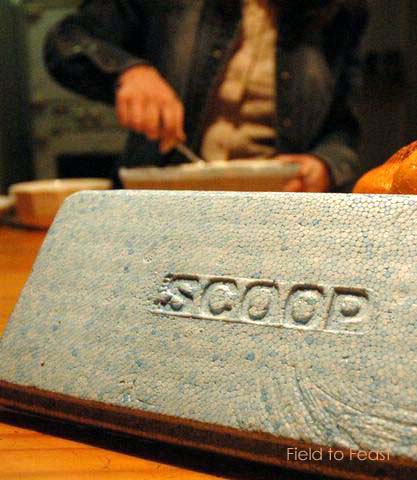
Our quest took us to the nearby shopping center, where, between Nando’s fast food chicken and a clothing store, there sat a long-ignored ice cream shop named Scoop. The rainbow-colored neon sign was uninviting, the peppermint-pink patio furniture chipped and cracked. From the outside you could only glimpse the funhouse mirrors lining the walls – and that glimpse was more than enough for me, a woman who ate a bowl of ice cream every day of her childhood, to give Scoop a wide berth.
But, with the arrival of the homemade chocolate-chili sauce, all preconceived notions were cast aside. As Mark and I stepped through the store’s threshold, not even the realization that, “yes, that is a fake sky painted on the ceiling, complete with ice-cream eating cherubs,” was enough to deter us.
As you have probably guessed, the ice cream was fantastic. In fact, it wasn’t even ice cream – it was gelato, hand-crafted on the premises by Ethiopian-Italians who had studied the art of gelato-making in Italy, no less. Who knew you could find homemade gelato in a shopping center in Harare? Call me crazy, but I was not in the know.
Gelato at Scoop has now joined the ranks of Beirut hummus at The Phoenician and haloumi pitas at Greek Sizzler as reasons why I’m happy that immigrants bring with them the food of their homelands, and that some of these immigrants have chosen to live in Zimbabwe.
With the help of Scoop’s vanilla gelato, the chocolate-chili sauce quickly disappeared. Luckily, however, my mother e-mailed me a recipe for Brigham’s hot fudge (and if you don’t know Brigham’s, you’re not originally from Massachusetts). With this reputable source as a starting point, I adapted the recipe to meet our chili requirements as well as the not insignificant constraints of this city’s ingredient availability (e.g., no baking chocolate!). It took much more spice than I thought for the sauce to pack the proper punch. The resulting mixture woos you with sweetness on the tip of your tongue, then surprises you with a nice, slow burn on the roof of your mouth.
Chocolate-Chili Sauce
1/3 cup butter
1 bar (100 grams) Cadbury Bournville dark chocolate
1 teaspoon cayenne pepper
1 teaspoon chili powder
¼ cup cocoa
3 tablespoons sugar (or, to taste)
½ cup cream
Pinch of salt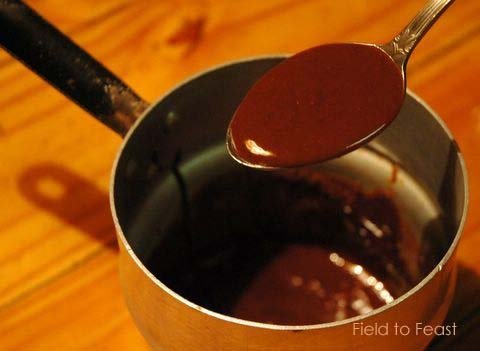 Melt the butter and chocolate in a double boiler. Add the cayenne pepper, chili powder, cocoa and sugar, and stir until smooth. Pour in the cream and add a pinch of salt. Serve over ice cream, or, if you’re lucky, Scoop’s gelato.


