If you are gorging yourself on coconuts, fish, pineapples and a bonanza of bananas, chances are, you’re on a tropical island. But if your fish is marinated in tamarind and lime, your tea steeped in lemongrass, your coffee infused with ginger and cardamom, your mouth burning from chilies, and your meal accompanied by chapattis and roasted breadfruit or cassava, then there is only one place in the world you could be – Zanzibar.
Like Timbuktu or Transylvania, Zanzibar is a place you might have heard of, but might not be able to state, with absolute certainty: 1) whether it truly exists or 2) where in the world it might be. Dust off your atlas and find Tanzania, in East Africa. Pick out Dar es Salaam, the country’s largest city, located along the coast. Off the coast, to the northeast, is the Zanzibar Archipelago. The archipelago consists of Pemba, a scattering of tiny islets, and the main island, Unguja (which, by itself, is often referred to as “Zanzibar”).
Zanzibar was a key trading post for slaves and then spices during the 18th and 19th centuries. This history created a society characterized by an amazing convergence of African, Indian, Arab and Persian cultures, all of which have influenced Zanzibar’s religion, architecture, and, of course, its food. For example, on Zanzibar you can eat ugali (Tanzania’s permutation of African stiff maize-meal porridge); dig into Indian-inspired plates of biriani, pilau and coconut milk-based curries; and nibble plump dates with your coffee. One of our trip highlights was snacking on lentil bhajias while watching the sun set over Stone Town from the Tower Top Restaurant at 236 Hurumzi (formally Emerson and Green), while the evening call for prayer wafted on the sea breeze from every mosque spire.
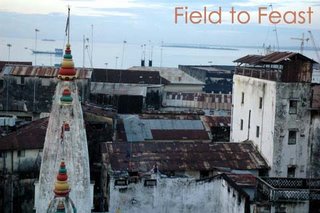
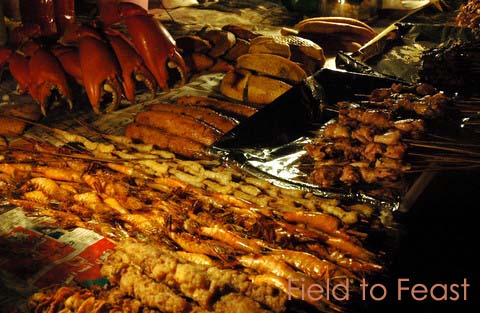
Coming from a landlocked country, we eagerly anticipated Zanzibar’s many opportunities for ocean-gathered eating. Upon arrival, we headed straight for Forodhani Gardens, a night market that boasts table after table laden with calamari steaks, octopus, crab claws and an astonishing array of fish kebabs – your choices include red snapper, kingfish, tuna, and prawns, to name a few. It’s a chaotic scene. Smoke rises from dozens of grills and every vendor uses his best sales pitch to attract your attention (and money) while you negotiate aisles clogged with wide-eyed tourists, gaggles of local teens, and “helpers” directing you to their preferred stall. Another Forodhani staple is Zanzibar pizza which, despite being a crêpe topped with cheese, green chili, onion, tomato, egg, cilantro, mayonnaise, ginger paste, garlic and minced meat (optional), somehow actually does taste like pizza and is surprisingly good. It also reminded me of a favorite street food from China, jian bing.


Zanzibar was once known as the Spice Islands, and spices are still an 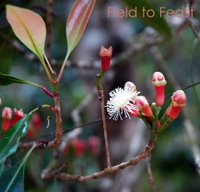 important export. “Spice tours” – visits to farms that grow spice-generating trees and plants, as well as tropical fruits – are an established tourist must-do, and we happily complied. We discovered that both cardamom and peppercorn are native to the island, but that the other spices Zanzibar is known for – vanilla, clove
  and cinnamon – were all brought here by the Omari Sultons who ruled during the 1800s, when Zanzibar was the Arab Empire’s capital in East Africa.
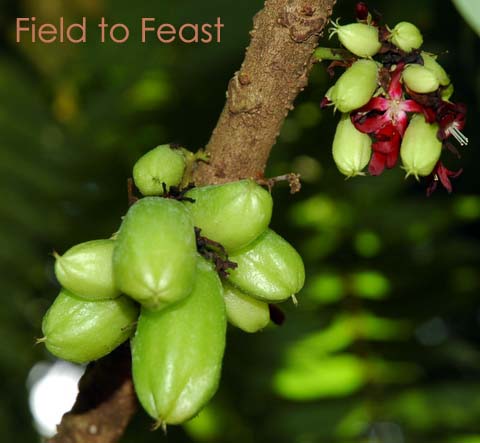
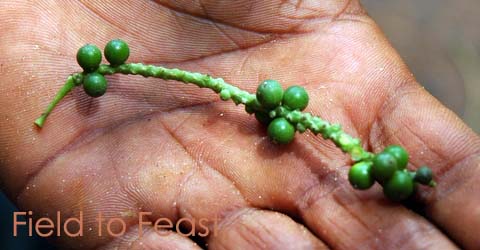
 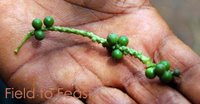 I love learning where the ingredients I cook with actually come from, so it was fascinating to see turmeric and cardamom plants, vanilla-bean vines, and cloves growing on trees as well as drying on large sheets in the sun. We got to taste-test many items, including fresh peppercorns, straight from the vine (which make your mouth tingle) and the tart mbiri mbiri, a variety of star fruit used in recipes as a substitute for lime. We also timidly tried a red chili that is called “pilipili-hoho” in Swahili because you have to exhale with a “hoho” after eating it in an attempt to extinguish the fire in your mouth. In addition to being used in food, we learned that Zanzibaris have found other uses for spice plants and trees. For instance, cloves are used for toothaches and the menthol-scented root of the cinnamon tree is mixed with oil and used to relieve chest colds.
 One of the many things I loved about Zanzibar is that although you can plunk yourself down on a stunning white-sand, palm-fringed beach, the island is not one big, sterile, tropical resort. It is very much a living, breathing, bustling and, in many areas, poor and gritty, place. Public transport consists of dalla-dallas – pick-ups with modified truck beds featuring benches, wood or iron-lattice sides, and an awning top.
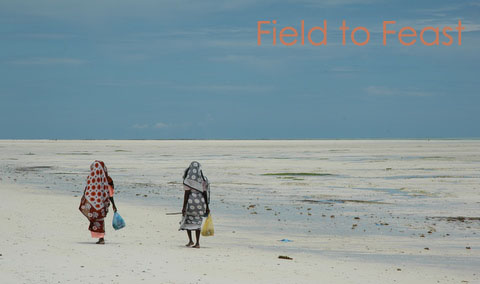
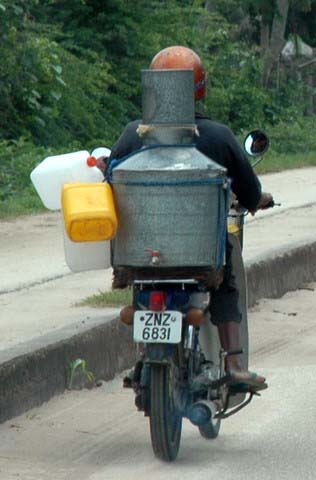
 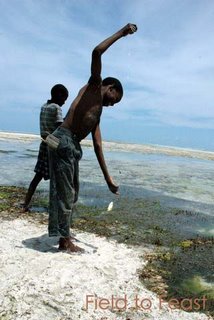 They rattle along streets lined with tin-roofed market stalls selling everything from fish to fruit to phone cards. Scooters zip and weave, some with strapped-on metal jugs that dispense milk – Zanzibar’s version of the milkman. By the coast, you can spot sailboats called “dhows” in the distance. They are endlessly photogenic, but also functional – this is what fishermen use to catch all that fish at Forodhani. At low tide, people with buckets wade into the ocean, collecting seaweed in plastic bags for export to East Asia, while young boys catch tiny fish in the tide pools using worms tied to a string.
Over the next few months, I’ll be trying to replicate some of our favorite Zanzibari dishes and drinks: red kidney beans with coconut (maharagwe), lentil bhajias, dawa (a drink made with konyagi, a local gin), Zanzibar pizza, Zanzibar coffee and many more. Stay tuned!

 In college, I made drip coffee. After college, I graduated to French press. As I turned 30, I acquired an affinity for coffee brewed in a sleek stovetop espresso-maker. One thing stayed the same – I liked my coffee dark, black and unadulterated.